

Computa, make these guys super beige and corny
On staying motivated in the age of AI

Peanut Butter—my younger, slightly dumber Calico cat—has the strange tendency to sometimes sleep with her body elongated and her hind legs spread wide, as if airing out her nether regions after a long, sweaty day’s work. At first, I was concerned, but now I find the humor in it. Photos of her in this pose have been shared, giggled at, and meme-ified, as if to say, “This is how your email finds me.”
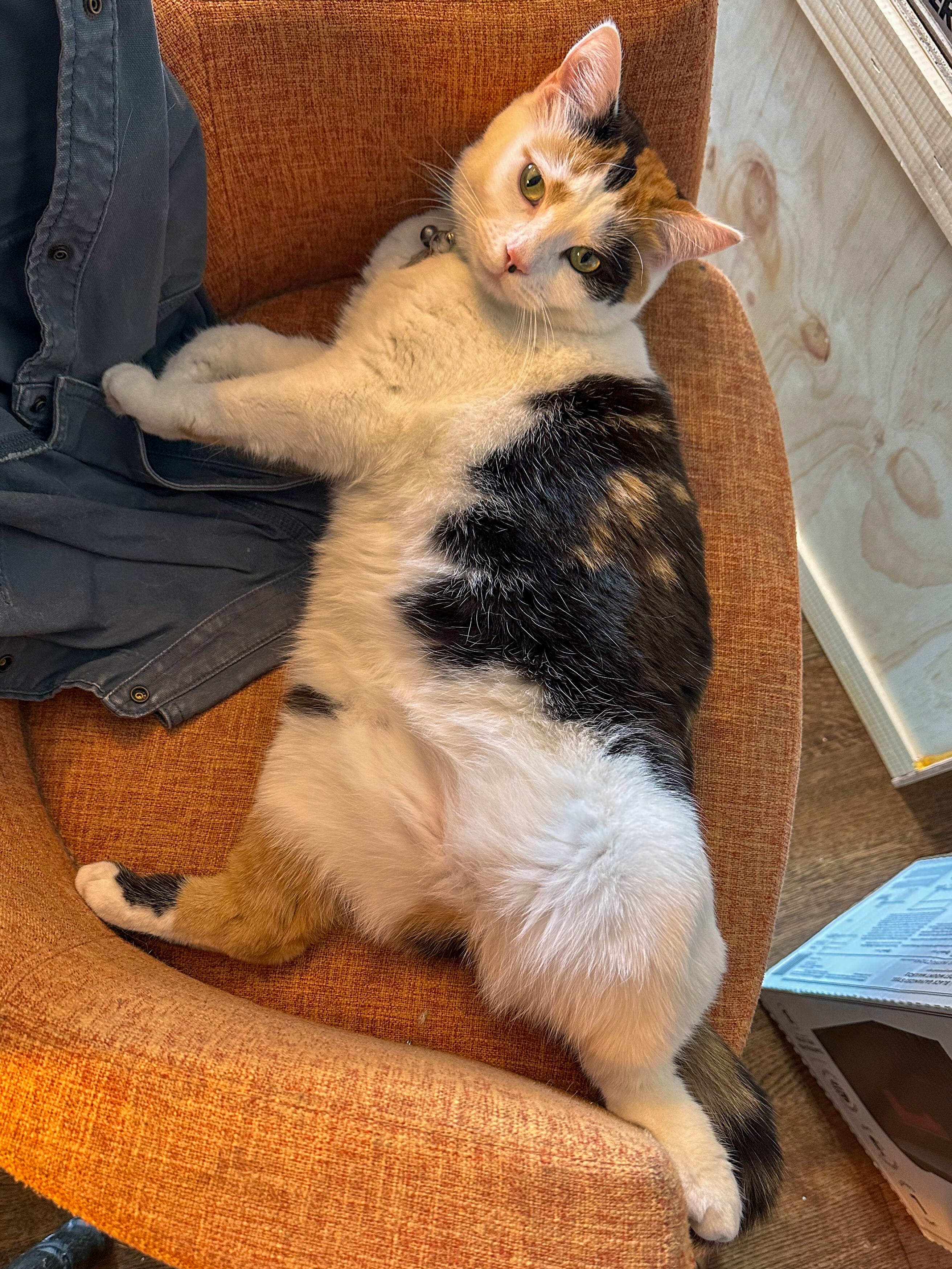
Lately, I’ve been trying to establish new routines and define a structure for my freelancing days, but most evenings I end up feeling like Peanut Butter—splayed out, cranky, and over it all (despite only using my brain, not my body) because it’s hard to suss out what this is all for.
Writing is immensely fulfilling, a dream come true that it’s my sole focus at the moment, and I’m incredibly grateful for the opportunities this year has brought so far.
But I’d be a Pollyanna if I didn’t acknowledge the disheartening nature of artificial intelligence, how it’s already greatly impacted creative industries and, really, our day-to-day life. Its subtle shift to general language, the way we structure our sentences and arguments (It’s not just x, it’s y.), has taken hold like a runaway train. And, considering all the other shit to slog through these days, it’s easy to feel like it’s the beginning of the end of critical thinking and personal composition overall.
I bought a membership to an arts-minded, very hip coworking space (there’s local pottery and bookshelves of museum monographs all around!), but I constantly overhear talk of AI Assistants, custom chatbots, and ways work can be streamlined and simplified by these models that churn out a sophisticated blend of Alphabet soup.
I tried to write some of this entry longhand—in an attempt to counteract hours of screen time and avoid the intrinsic distraction of electronic devices—but I forgot the minor inconveniences that come with the analog world. I sat down and, within minutes, both pens I brought with me quickly ran out of ink. I scribbled little circles, making indentations all across the margin, to no avail.
Instead of ignoring the AI beast, I’ve wondered how I can make reflections of it more central to my art writing and critical practice. Appalachia is still the core, but what kinds of influential art have been made without the distractions or corrections of AI?
I mentioned in the newsletter about Bone Thrones that I’ve become so invested in self-taught artists and unique environments because their presence and practices subtly advocate against an AI world. (Sometimes, before we knew that would become an option.)
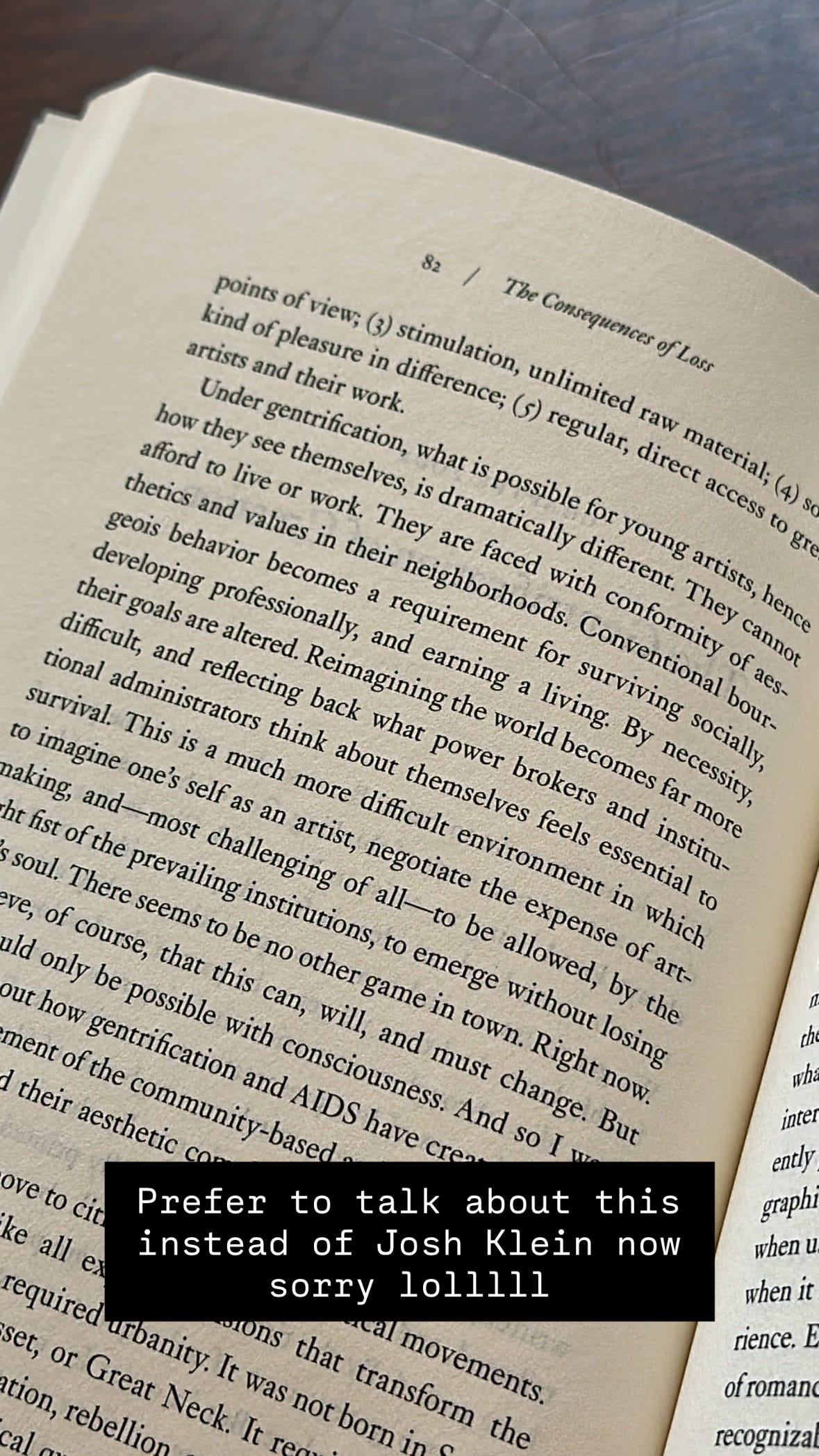
I also recently finished The Gentrification of the Mind: Witness to a Lost Imagination by Sarah Schulman, which had a lot of searing, important passages about how a homogenized culture makes us actually less free, less adventurous, less interesting. AI feels like its own form of gentrification, especially given how it’s taken over so many communication platforms and sanitized huge swaths of life. As for the book — I let a friend borrow it, I’m sorry, but I’ll include some great passages in the next newsletter. Maybe we should start a book club, too?
I guess what I want to advocate for is: Take time to foster boredom that leads to innovation, bring back alternative economic streams that involve talking to each other and not digitally hawking our mental real estate, bring back spiritual-fueled psychosis instead of computerized ones (please, Lord, don’t be like the TikToker who fell in love with her psychiatrist and constantly consulted her BFF Chatbot Claude about it), or simply make big cement grottos because what the hell else is there to do in the dead of winter.
I’m maybe sounding too blasé and minimizing in trying to keep a sense of humor and levity about this, but really, it’s a defense mechanism to keep from feeling defeated. It’s obvious AI is a big software bubble that’s about to burst—that I’m not worried about—but what happens to our brain chemistry afterward?
Craft, by its nature, takes things slower, prioritizes the hand, but it still feels like it could slide into stickiness. (See the recent changes at VCU for an example of how a lauded, influential institution can quickly dump craft due to vague economic, keeping-up-with-the-world reasons.)
My hope is that craft remains somewhat democratic in spirit and in practice, not another luxury good for the wealthy.
I also hope craft continues to be in the service of something larger — a way to trick our brains into focusing on something while, maybe, we have difficult conversations with others in a shared studio space or simply sit with ourselves in order to move through something else. (I’m working on an essay about folk schools and democracy and another short piece about craft and addiction recovery…all these thoughts are swimming in my head like goldfish, forgetting the plot halfway through because the topics are so layered and lead me down so many rabbit holes.)
Anyway, this is getting rambly. Just wanted to think through some things and send a missive out to the world. It’s been too long since my last Substack, ack!
In the spirit of providing a proper update, here are some articles published over the past few months since the last newsletter. There are a few projects behind the scenes that have yet to see the light of day, but alas.
My output is getting to the point where I don’t expect any one person to read half the things I put out, but maybe something in this list strikes yer fancy. Thank you, as always, for reading.
OH, ALSO! Write with me this summer at Haystack Mountain School of Crafts in coastal Maine! It will be an absolute dream. Registration is open again, but spots are limited. Let’s fight against all these chatbots together.
Anyway, the stories:
middle of somewhere at the International African American Museum, South Carolina - American Craft
Agenda: From Hosiery Factory to Art Haven, Derby Fest – Garden & Gun
Craft-itarianism Focuses on Craft That Sustains - American Craft
Visual Index Brings the Whole Country to North Carolina - American Craft
A New Kentucky Residency Offers Space for Exploration and Dialogue - American Craft
The Playlist:
Yo La Tengo – Painful
Charley Crockett – Clovis
Cat Power – Jukebox
Ratboys – Singing to an Empty Chair
Wednesday – Bleeds
Rogue Wave – Descended Like Vultures (10th Anniversary Edition)
Bleeds is such a good album
This was a deep breath of fresh air! I find the proliferation of AI slop on this platform — and the effusive praise it receives — wildly deflating, particularly since Substack is the only social media I’m using right now (besides Letterboxd). It’s so bad that even folks I genuinely believe wrote their piece unassisted are STILL using the stilted cadence, the line breaks between each sentence, and the “it’s not x, it’s y” contrastive negations. So even the holdouts are absorbing this bullshit by osmosis.
There have always been clout chasers who care far more about being perceived as a writer than actually writing, but now they have these powerful tools and a decaying cultural landscape to bolster them. My only hope is that genAI becoming rampant accentuates the spiritual dimension of true creativity, and thus its actual value, because genuine artists will never stop working no matter how bad this gets. We just have to hold the line until this mass delusion wanes. I just hope I live to see it.
Also I’d totally join your book club! 👋🏾